
Publications
Note:
-
Books will be grouped together by topic / geographic region and listed in date order of publication
-
Not all books are available for download
-
Some books are linked to where they can be purchased
Topics / Geographic Regions Listed Below
-
Rabaul
-
Mt Hagen
-
Madang
-
Madang and Port Moresby
-
Port Moresby
-
Oral Traditions
-
Lotu Katolik: Catholic Missions in Papua New Guinea and Oceania 1880s to 2020
Rabaul

They Came to Matupit
The history of the Mission and the traditional culture and beliefs of the Tolai people provide the background for this book. 2007 was the 125th anniversary of the Sacred Heart Missionaries in New Britain.
They came to Matupit tells the story of the first Catholic Missionaries who came to Rabaul in September 1882. The cover here features the Matupit Church and Tavurvur Volcano which overlooks Matupit Island.
Vunapope Press. 117 pages. Second Edition 2015 by UPNG Press.
Not available for download

Time of the Taubar
Time of the Taubar is written about Matupit Island in the days before Europeans came. There was conflict between the Matupit people and the Kininigunans near Kokopo.
They crossed the harbour in their fighting canoes. When Rev George Brown, a missionary came he brought peace between the fighting tribes. The Taubar is the dry season ich is the symbol of the peace he managed to bring about.
Time of the Taubar 1973 Kristen Pres Madang.
Not available for download

Tolai Myths of Origin
Tolai myths of Origin was written by Dr Hermann Janssen and Brenda skinner and Mary Mennis. There are many two-brother myths of To Kabinina and To Purgo who were two creator beings who vied with each other. To Kabinina made all the good things and To Purgo messed things up. It is a study of the good and evil in society.
Tolai Myths of Origin, 1973 Jacaranda Press, Brisbane. Second edition UPNG Press 2015.
Not available for download

Tubuan and Tabernacle
Tubuan and Tabernacle is about two priests: one a German Missionary and the other a Tolai from Rabaul. Fr Bernard Franke arrived from Germany in 1928 when he was 26 years old, full of missionary zeal and spent the following 50 years in New Britain. Archbishop Benedict To Varpin, grew up in the Tolai society with all the traditional tribal customs. He became a priest and then a bishop of Bereina in 1979 and Archbishop of Madang in 1987 to 2001.
Tubuan and Tabernacle 2007 Lalong Enterprises. 2nd edition 2015. UPNG Press. 282 pages and illustrations

The Babau of Rabaul
The Babau of Rabaul is about the large fish-traps made by the Tolai people in East New Britain to catch the pelagic fish which swim one to two kilometres off-shore. The Tolai men built these large traps and hung them from babau bamboo rafts which were held in place by peo anchors. The system was quite ingenious and admired by modern fishermen. These days the Tolai have adapted the traps and the anchors using modern equipment. In the 1970s Brian Mennis took many photographs of the traditional system and his photographs are quite historic. In 2019 His wife Mary Mennis did further research into these babau fish traps with the help of Tiolam, Wawaga of Raluana Village. This book is the end result of this research and is partly based on Brian’s articles and photographs done in the 1970s.
The Babau of Rabaul. 2019 UPNG Press.
Mt Hagen

Hagen Saga
Father Ross is one of the legendary figures of Mount Hagen, known far more widely than in his own Catholic parish of Rebiamul. Inspired by the first photographs of the Wahgi Valley taken by the explorers Mick and Danny Leahy in their first contact patrol of April 1933, he himself, reached Hagen by foot patrol from Bundi a year later on March 1934. It took forty days to make the trek recorded by Mary Mennis. In 2014 500 Mt Hagen people used this map as a pilgrimage to honour Fr Ross eighty years later.
Fr Ross and Brother Eugene had an intense commitment to the Hagen people. Fr Ross continued there for fifty years until his death in 1973, at the age of 77. He was buried in his own parish cemetery, an act which marked his final identification: “In life he had not wanted to leave his people, and now in death it would be so.”
A review states “ Mary Mennis has written a straight forward history of the long and devoted life of Father Ross spanning two world wars and their effects on a substantially German-speaking missionary order which first made its headquarters at Alexishafen near to Madang”.

Rempi to Rebiamul. Missions from Madang to Mt Hagen
Archbishop Young of Mt Hagen wrote “Mrs Mennis has done a wonderful job in selecting a good beginning an open and a series of interesting threads”. Rempi to Rebiamul is presented in the expectation that these past stories will be of interest to present and future readers. It is the history of the Divine word missions based on interviews with prominent church and government leaders and national people while Mary Mennis lived in PNG in the 1970s and later on made visits back in 1994, 2014 and 2016.
Rempi to Rebiamul. Missions from Madang to Mt Hagen was published in 2016 by the UPNG Press. 242 pps with many illustrations.

My Hagen People
My Hagen People. The cover of this book depicts Fr William Ross with his friends’ chiefs Ninji Kama and Wamp Wan. This photograph was taken in the early days of the Mt Hagen Catholic Mission in the Western Highlands of PNG. Fr Ross began the mission in Mt Hagen in 1934 and told of his experiences in numerous article he sent home to America. This book is a compilation of these articles so the people through time may read of his experiences and learn about the traditional culture of the Hagen people. The articles he wrote home can be found in The Catholic freeman’s Journal as well as he Christian Family which is held in the SVD archives in Techny USA
Madang

A Potted History of Madang
The Potted History A Potted History of Madang. Traditional Culture and Change on the North Coast of Papua New Guinea. 2006 Lalong Enterprises, Brisbane. Second edition 2016 UPNG Press 326 pages. The Potted history sees Madang from the people’s point of view. Presented in readable form, it studies the myths and oral tradition handed down through the generations and the changes that occurred during the German colony, the Australian administration, the Pacific war and then up to Independence in 1975 and beyond until today. I came to know and respect the village culture of the Bel people of the village people who shared their oral traditions, skills of pot making and canoe building. The book records some of the past time for the present and future.
Mariners of Madang and Austronesian Canoes of Astrolabe Bay
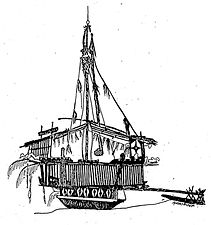
Mariners of Madang and Austronesian Canoes of Astrolabe Bay. 2011. Published by the University of Queensland. This book studies the culture of the Madang Province with its pots, canoes and trading. Included is a description of the construction of the large trading canoes which were used traditionally to take cargoes of pots to the Rai Coast. Miklouho Maclay described them in 1871and was amazed at their size and with the shelter built on them below two great sails. The men stopped building these canoes by the 1940s so there were few men left in the 1970s who knew how to build them. In 1978 I encouraged a group of four men to build a one-mast lalong and wrote a handbook of its construction to keep this knowledge for future generation. I was happy to see that a large balangut was built in 2013 by the sons of those old mariners who died long ago. Second Edition UPNG Press 2016.

Kain, Friend of Maclay
Kain, Friend of Maclay 1996 Kristen Pres Madang
PNG. Second edition UPNG Press 2016. Kain was a headman on Bilbil Island and he befriended Miklouho Maclay, the Russian scientist who arrived in their area in 1871. Maclay refers to Kain often in his diaries so it is interesting to read of the impact he had on the local culture.

Archipelago of the contented People
Archipelago of the contented People. Kristen Pres Madang PNG. Ed) Translation by Christiane Harding of Finsch, O. (1888) This is a translation from the German of the work by Otto Finsch Kristen Pres Madang PNG. Ed) Translation by Christiane Harding of Finsch, O. (1888) Samoafarten, Reise in Kaiser Wilhelmsland und Englisch Neu-Guinea in den Jahren 1884 und 1885 An Bord Des Deutschen Dampfers, “Samoa”. Hirt & Sohn. Leipzig: Kristen Pres Madang.
Not available for download.

The Flagged History of Madang.
Published in 2018 by Sir Peter Barter, for APEC visitors. This booklet follows the history of the province through the flags of the various countries that influenced its development.
Five thousand copies of this booklet were printed for use in schools in Madang.
Port Moresby and Madang

Sailing for Survival 2014
Sailing for Survival 2014. A Comparative Report of the Trading System and Trading Canoes of the Motu people the Port Moresby area and the Bel people in the Madang area of Papua New Guinea. 226 pages. Published by Otago University. Second Edition 2015 the University of Papua New Guinea Press. Sailing for Survival is a comparative study of the trading systems of two groups of people in Papua New Guinea: the Bel people of Bilibil/ Yabob on the North Coast, near Madang and the Motu people, on the South Coast, near Port Moresby. These two groups had no contact with each other on their trade routes, nor did any trade items pass from one trade area to the other and for hundreds of years they developed completely independently.
It will be shown that they had common ancestry in the Bismarck Archipelago some two or three thousand years ago. Each group evolved their own system of survival through trading pots on long trading trips which became a focal point of their culture, beliefs and ritual. They developed quite different trading vessels: the lagatoi of the Motu people and the lalong of the Madang people. The form of these canoes determined their function. In the Motu area the people built large lakatoi and went on hiri trips to the Gulf area to exchange their pots for sago needed in the hungry months of the years.
Port Moresby

Lakatoi and the Hiri Dalana
Lakatoi and the Hiri Dalana 2017. Published by UPNG Press. A study of the Lakatoi canoes including a first-hand description of their construction and the hiri trade including interviews with some of the older men who took part in them. . Lakatoi and the Hiri Dalana is about the canoes of the Port Moresby area of Papua New Guinea. Travelling on these lakatoi canoes, the Motu traders sailed to the Gulf of Papua to exchange their clay pots for the sago necessary for survival in the ‘hungry times’ of the year. This voyage was the Hiri and they travelled on a maritime highway, called Dalana. The Hiri was the basis of a rich material culture: the planning to go on a trading trip; the involvement of the village leaders in the project; the ritual and ceremonies that were followed; the protection through magical powers; the prestige gained from going on a trip and the social connections made through visiting other places. The women played an important role making the clay pots and welcoming the men home, whirling their grass skirts as they danced on the beach.
There is a description of two lakatoi built on Magnetic Island in 1995 by Pari and Lealea villagers as part of the VP50 celebrations in Townsville, the Sister City of Port Moresby. Interviews of men who made hiri voyages in the 1930s and 1950s were made at this time. This book includes early photographs by explorers and missionaries, as well as maps, diagrams and descriptions of the pottery; the lakatoi; and the hiri exchange system. Recent discoveries of lapita pottery by archaeologists date the arrival of Austronesian Speakers to Papua nearly 3,000 years ago, showing the ancient nature of the pottery. There are also sections on the Trobriand Islands and the Massim with their extensive trading networks and trade items which were carried in their large trading canoes.
Oral Traditions

The Voices of the Villagers
Oral traditions collected in Papua New Guinea by Mary Mennis in Madang villagers in the 1970s, and with Port Moresby villagers in 1995.
Not available for download.

Myths and Magic of Melanesia
Based on Stories and Myths of Papua New Guinea, collected and annotated by:
Associate Professor Colin De’Ath,Faculty of Environmental Studies,
University of Waterloo, Ontario, Canada.
Mary Mennis BA, DipEd. M.A; M. Soc. Sc,
Formerly Research Assistant at the University of Queensland.
Previously published as Merging Men and Nature with some additional myths. First Published in Oral History Vol IX No 4Institute of Papua New Guinea Studies, 1981 2nd Edition 2020 by Mary R. Mennis.
Not available for download.
Catholic Missions in
Papua New Guinea and Oceania

Lotu Katolik: Catholic Missions in Papua New Guinea and Oceania 1880s to 2020
Recently completed text-book for the seminarians in Port Moresby Lotu Katolik: Catholic Missions in Papua New Guinea and Oceania 1880s to 2020 700 pages long.
Lotu Katolik: Catholic Missions
in Papua new guinea and Oceania
1880’s to 2020
By Mary R. Mennis MBE
Download Volume 1 and Volume 2